

Want to build wealth in 2025? This palm oil business guide shows how women like you are making up to ₦3M with just 100 gallons. No loss, high profit.
Did you know one of the easiest ways to turn a small investment into serious profit is hiding in plain sight right in Nigeria’s farmlands?
The palm oil business is not just about cooking oil. It’s a multi-billion-naira industry where sharp investors and everyday women are quietly building generational wealth from farm to drums to market.
This is not theory. I was born into a palm oil family and have personally invested in this sector for over a decade. In this guide, I’ll show you exactly how the palm oil business works, from processing and storage to selling and profiting.
Whether you’re looking to start a small business, invest passively, or scale into bulk supply to factories, you’ll walk away with an action plan to start immediately.
Table of Contents
Why Palm Oil Business is a Smart Investment in 2025
Let’s start with why this business works year after year:
✅ Evergreen Demand
Palm oil is used in:
- Almost every Nigerian kitchen
- Cosmetics
- Industrial products (like soap)
Even when prices rise, people keep buying. Factories literally struggle to find consistent supply. There’s always demand and that’s your profit opportunity.
✅ Highly Profitable
In 2024, we bought 25L gallons of palm oil at ₦20,000 and sold them for ₦25,000 to ₦50,000 in just a few months. Some of our Fellow Tribe women who held out longer made over 100% return.
✅ Low Risk
In my 10+ years of investing in palm oil, I’ve never recorded a loss. Even in rare cases when prices stagnated, we still broke even. The only challenge is knowing when to buy and sell and I’ll teach you that.
How the Palm Oil Business Works in Nigeria (Step-by-Step)
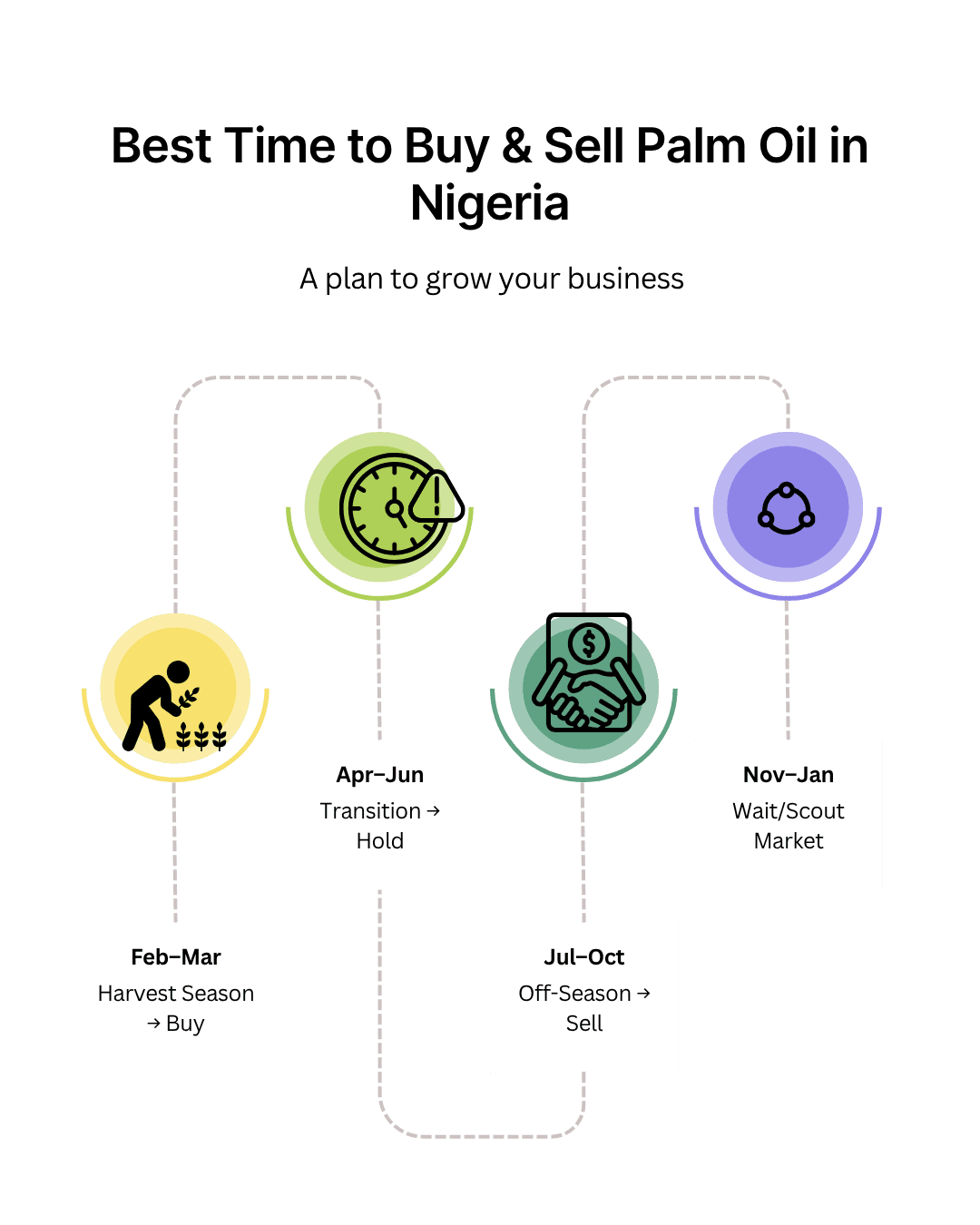
| Month Range | Action | Reason |
|---|---|---|
| Feb–Mar | Buy | Peak harvest, low prices |
| Apr–Jun | Hold | Monitor market |
| Jul–Oct | Sell | Scarcity, high prices |
| Nov–Jan | Wait/Scout | Research & plan next cycle |
1. Understand the Seasonal Cycle
Palm oil follows a seasonal price pattern:
- February–March: Peak production season. Prices are low.
- July–October: Scarcity season. Prices rise.
Smart investors buy during abundance and store for months, selling during scarcity.
“You can’t cheat nature,” my mother always says. And she’s been in this business for 25+ years.
2. Palm Oil Processing (Behind the Scenes)
Here’s what happens at the oil mill:
- Palm fruits are boiled.
- Then, they’re crushed in a local engine to extract the oil.
- The oil is drained and filtered, while the chaff (called “cha”) and kernel are stored for other uses, nothing is wasted.
3. Storage Tips (Avoid Costly Mistakes)
Once processed, palm oil is stored in:
- 25L gallons
- Or drums (8 gallons = 1 drum)
Important tips:
- Never store oil directly on cement floors. It causes spoilage (“congealing”).
- Avoid water contamination during processing.
- Use planks or sacks under your containers for ventilation.
Last year, we stored over 50 drums with Fellow Tribe women alone. That’s over 2,000 gallons.
Where to Sell Your Palm Oil for Maximum Profit
There are 5 major ways to sell palm oil:
1. Open Markets
Walk into any major market during scarcity season and say you have oil. “Dem go rush you.”
2. Bulk Sales to Dealers
Large-scale buyers are always hunting for bulk suppliers, especially in Lagos and Onitsha. Do your market research on locations with better prices.
3. Supplying Factories
This is our personal strategy. Soap and cosmetics factories buy in bulk and pay well, though often on credit. Build relationships here.
4. Retail (Homes & Restaurants)
Package your oil in smaller bottles and sell to households. If your product is clean and authentic, people will keep coming back.
5. Online & Export
- Use Jumia, Konga, or social media to sell online.
- You can even explore exporting (though we’ve not done this yet due to high local demand).
Cost Breakdown: How Much to Start a Palm Oil Business?
Here’s what you’ll spend money on:
| Item | Cost Estimate |
| 25L Gallon (Palm Oil) | ₦20,000 – ₦25,000 |
| Container (Gallon) | ₦4,000 |
| Container (Drum) | ₦10,000+ |
| Transportation | Varies by location |
| Storage Space | Free (home) or rented |
You can start small with ₦100,000–₦200,000, or go big with ₦1 million+ for bulk and factory-level supply.
Profit Potential: How Much Can You Make?
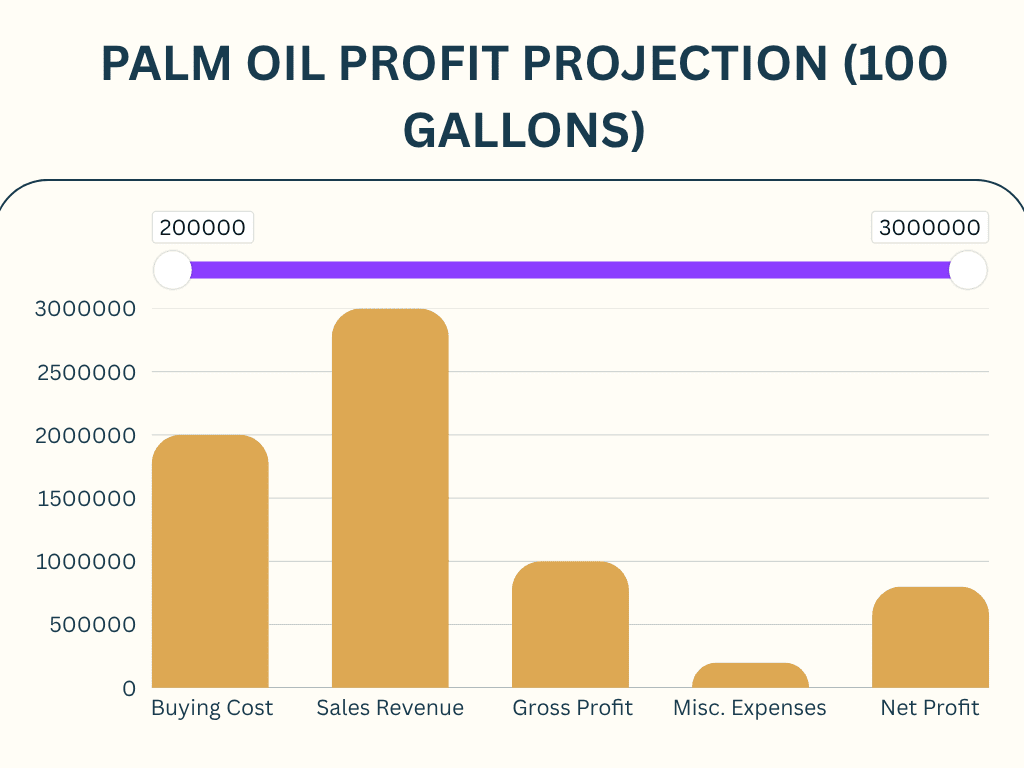
Let’s use last year’s example:
- Bought at ₦20,000 (per gallon)
- Sold at ₦35,000–₦50,000
- Profit per gallon: ₦15,000–₦30,000
- If you stored 100 gallons = ₦1.5M to ₦3M profit
Of course, this varies by location and timing. The later you sell (September–November), the higher your chances of top profit.
Challenges to Be Aware Of
- Price Fluctuation: Not 100% predictable.
- Storage Mistakes: If water enters oil, it can spoil and reduce value.
- Credit Sales: Factories often delay payment; plan your cash flow.
But with experience (or partnering with people who have it), you’ll minimize these risks.
Want to Start Today? Here’s Your Action Plan
✅ Step 1: Pick Your Strategy
Are you going into:
- Investment only (buy + store)?
- Trading (buy in bulk + resell)?
- Full production (mill + process)?
✅ Step 2: Find a Trusted Operator
Partner with someone experienced in palm oil (like I did with my parents and Fellow Tribe members). Don’t go in blindly.
✅ Step 3: Buy During Harvest Season
Target February–March for bulk purchase at low cost.
✅ Step 4: Store Smartly
Use clean drums, avoid moisture, and follow all best practices shared earlier.
✅ Step 5: Sell at Peak
Start selling around August–October when prices peak.
Final Thoughts: Should You Invest in Palm Oil Business?
If you’re looking for a low-risk, high-demand business opportunity in Nigeria, the palm oil business is one of the best options in 2025.
It’s scalable, evergreen, and perfect for both men and women whether you’re starting with ₦100k or ₦10 million.
And if you’re a woman ready to grow your income, consider joining our Fellow Tribe Community where we save, invest, and build wealth together. Last year, our members invested over ₦2 billion in opportunities like this and we’re just getting started.
Is the palm oil business profitable?
yes, the palm oil business is considered to be highly profitable due to its non stop demands in the food and cosmetic industry
how much is 25 litres of palm oil
the price of 25 litres of palm oil is between 90 thousand to 102 thousand naira
Which state has the best palm oil in Nigeria
Edo state, Awka ibom, Ondo and Delta state are usually the states with the best palm oil

Boyo Michael is a Nigerian-born contractor engineer based in Benin City and the founder of ValueHubSpot.ng. He writes practical insights on business growth, digital marketing, personal branding, and financial opportunities for Nigerian entrepreneurs and professionals.